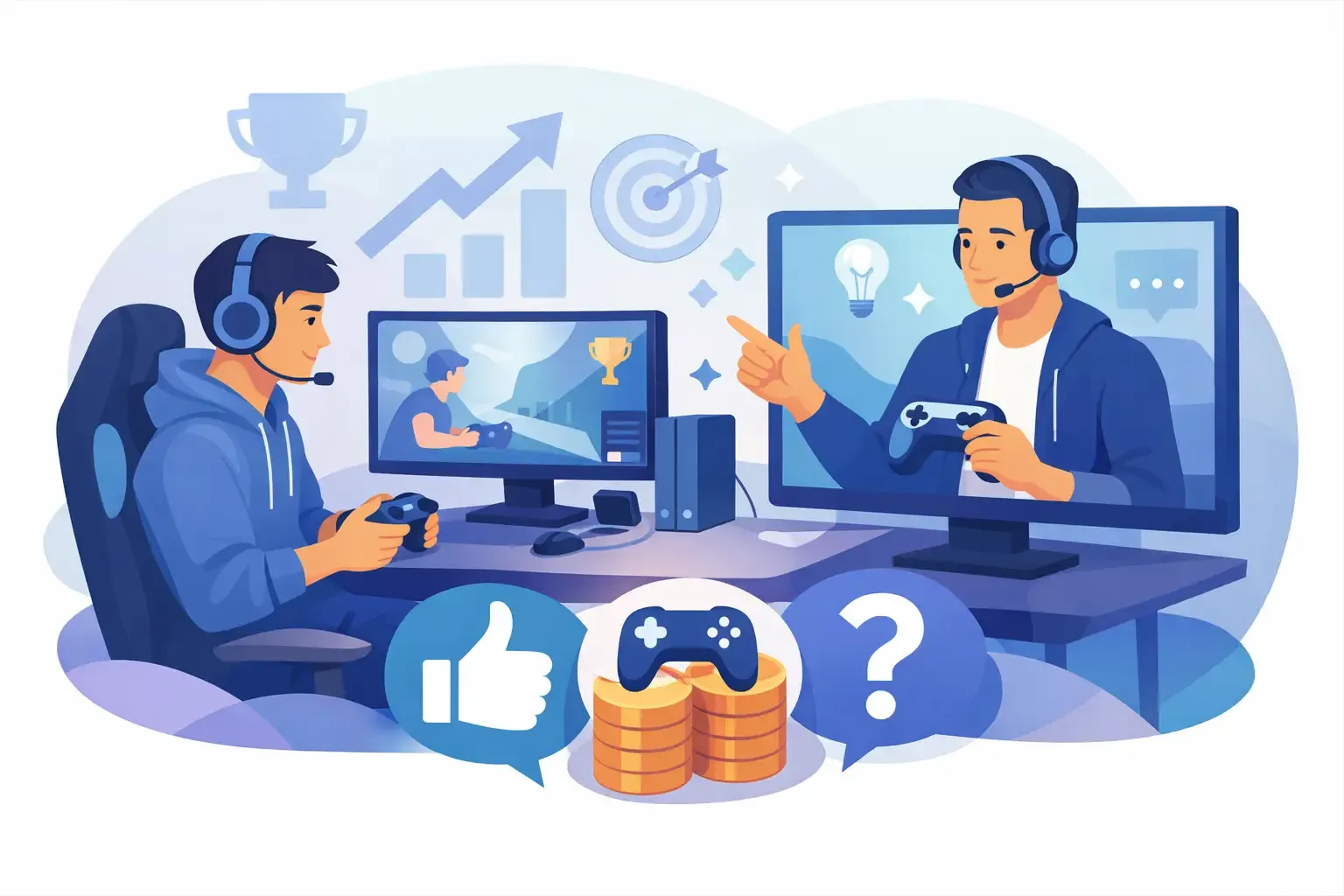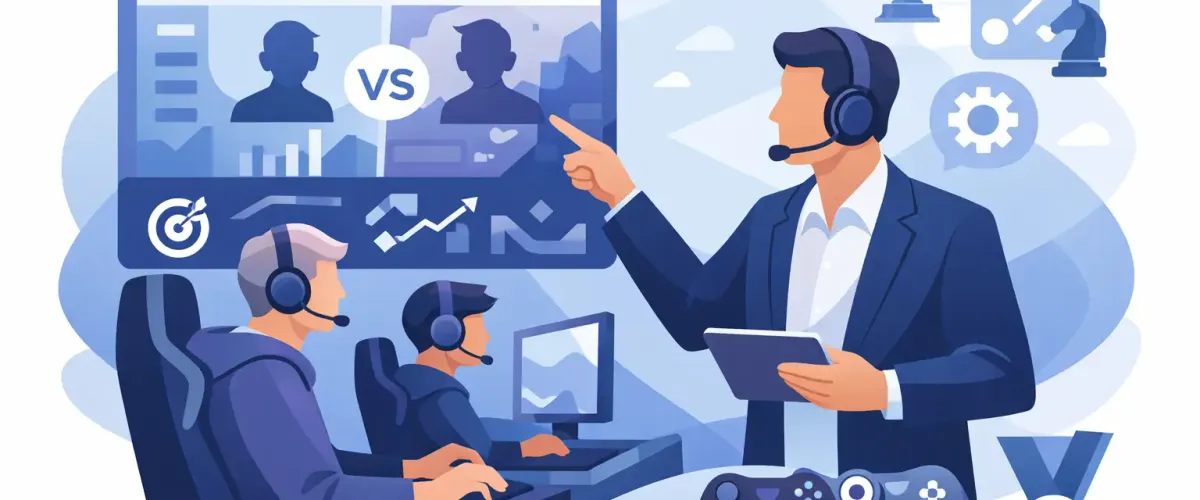
The wrong coach can leave you with generic advice, a lighter wallet, and the same bad habits you started with. The right one can help you spot the mistakes you keep missing, build a real improvement plan, and turn random ranked grinding into focused progress. If you're trying to figure out how to choose an esports coach, start by treating the decision like a competitive advantage, not a casual purchase.
A strong coach does more than tell you what you did wrong. They help you understand why you're making the same mistakes, how to fix them, and what to prioritize first. That matters whether you're a newer player learning fundamentals or a high-ELO grinder trying to clean up decision-making under pressure.
What matters most when you choose an esports coach
The biggest mistake players make is choosing based on rank alone. High rank matters, but coaching skill and playing skill are not the same thing. A cracked player might dominate ranked games and still struggle to explain concepts in a way you can actually apply.
You want proof of game knowledge, but you also want structure, communication, and relevance to your goals. If you're a Gold Valorant player trying to improve utility usage and team play, a Radiant coach who only talks about aim mechanics might not be your best fit. If you're a Diamond League player pushing for Masters, a coach who mostly teaches beginner laning concepts may not move the needle enough.
Good coaching sits at the intersection of expertise and fit. That's the standard.
Start with your goal, not the coach's resume
Before you compare profiles, get specific about what you want. "I want to get better" is too broad to be useful. "I want to stop throwing mid-game leads in League," "I want cleaner rotations in Rocket League," or "I want to improve my entry pathing in CS" gives you something a coach can actually work with.
Your goal shapes the kind of coach you need. Some coaches are best for fundamentals and fast rank recovery. Others are stronger in advanced macro, role-specific decision-making, tournament prep, or mental performance. A coach who is perfect for a Bronze player may not be the right fit for a semi-competitive team player, and the opposite is also true.
The clearer your goal, the easier it is to judge whether a coach can help you reach it.
Match the coach to your game, role, and problem
Game knowledge needs to be specific. Esports titles are too complex for broad, one-size-fits-all instruction. A great Overwatch 2 coach is not automatically a great Apex coach. Even within the same game, support, jungle, controller, AWPer, and IGL roles all demand different strengths.
That is why role relevance matters so much. If your biggest issue is champion pool management in League or support positioning in Overwatch 2, find someone who clearly coaches that lane, role, or style. You will get better feedback, faster.
This is also where honest self-assessment helps. Don't chase a coach just because they are famous or insanely ranked. Chase the one who teaches what you actually need.
Look for evidence of coaching ability
If you want to know how to choose an esports coach without guessing, pay close attention to how they teach, not just what they have achieved. Coaching ability shows up in signals like strong reviews, repeat students, clear service descriptions, and session formats that match real improvement.
For example, live gameplay analysis is great if you struggle with decision-making in real time. VOD review works well when your mistakes are consistent and easier to spot after the match. Duo sessions can help if you need guided repetition and immediate correction. Custom improvement plans are valuable if you've hit a plateau and need more than a one-off lesson.
A serious coach should be able to explain how they work. If their profile or pitch is vague, that usually leads to vague results.
Reviews should tell you more than "great coach"
Ratings matter, but the comments behind them matter more. Look for reviews that mention specific outcomes: improved map awareness, better laning, smarter ult economy, more confident comms, cleaner mechanics, or rank gains over time. Those details tell you the coach is creating transfer, not just making a good first impression.
You should also watch for pattern recognition. If multiple students say the coach is patient, structured, and highly specific, that's a strong sign. If reviews keep praising the coach's skill but say little about actual teaching, be cautious.
Chemistry matters more than most players think
Some players need blunt, direct feedback. Others learn better from a coach who is calm, methodical, and collaborative. Neither style is automatically better. What matters is whether the coach's communication helps you absorb feedback without shutting down or getting overwhelmed.
This is one of the biggest trade-offs in coaching. A hard-pushing coach might sharpen one player fast and completely lose another. A more encouraging coach might build confidence and consistency, but feel too soft for someone preparing for high-level competition. It depends on your personality, experience, and goals.
That is why the first session matters so much. You are not just testing the coach. You are testing the working relationship.
How to choose an esports coach for your current skill level
The best coach for you now may not be the best coach for you six months from now. Skill level changes what kind of instruction creates results.
If you're newer to ranked or still struggling with basic mechanics, you need clarity and prioritization. A coach should help you build strong fundamentals instead of flooding you with advanced concepts you cannot execute yet. Too much information too early usually slows improvement.
If you're already experienced, the value often comes from precision. That can mean role-specific matchup analysis, better macro calls, refined teamfight planning, sharper VOD breakdowns, or identifying the small habits that cap your performance. At higher levels, progress is usually less about discovering obvious mistakes and more about tightening weak links.
A strong coach knows the difference and adjusts their approach instead of teaching every player the same way.
Price matters, but value matters more
Cheaper is not always smarter, and expensive is not always better. A low-cost session with generic feedback can waste both time and money. A premium coach who gives clear, actionable guidance and a focused plan may create better value in one session than three average lessons.
Still, budget matters. The smart move is to think in terms of return on improvement. Ask yourself whether the coach's offer matches what you need right now. If you're testing coaching for the first time, a single VOD review or intro session may be enough. If you're preparing for serious ranked progression or competition, a more structured package could make more sense.
Look for transparency around session types, duration, and what you walk away with. You should know whether you're getting live analysis, notes, drills, replay review, or a custom plan.
Red flags you should not ignore
A coach does not need to be flashy. They do need to be credible, clear, and relevant. If someone promises instant rank jumps, guarantees unrealistic results, or talks more about themselves than your improvement, that's a warning sign.
Another red flag is advice that sounds copied and pasted. Strong coaching should feel tailored to your game, your level, and your goals. If every answer is generic, the session probably will be too.
Be careful with coaches who cannot explain their process, dodge specifics, or have no visible proof of past student satisfaction. In a marketplace setting, transparency is a major advantage. BetterGamer, for example, makes it easier to compare coach profiles, reviews, supported games, and session formats so players can make decisions based on fit rather than hype.
The best choice is usually the clearest fit
You do not need a perfect coach on paper. You need a coach who understands your game, teaches at your level, communicates in a way that works for you, and has a track record of helping players improve in the areas that matter most to you.
That is the real answer to how to choose an esports coach. Don't shop for prestige alone. Shop for alignment. When the coach's expertise, teaching style, and session format all match your goals, improvement stops feeling random.
Pick the coach who can show you what is holding you back, then help you fix it one decision at a time. That's how players climb with purpose.